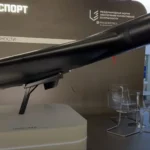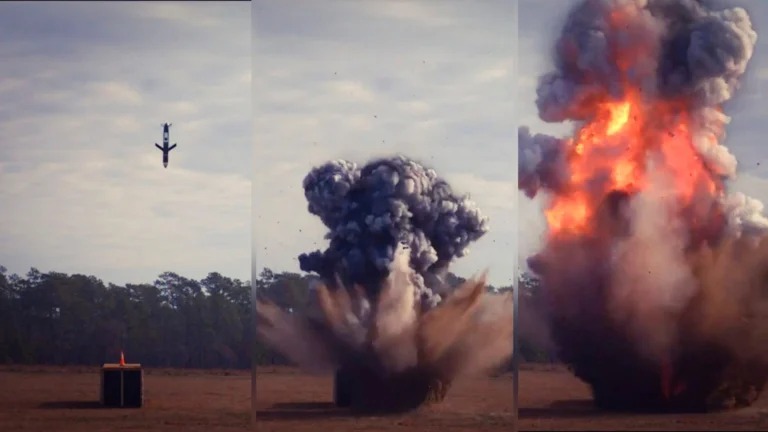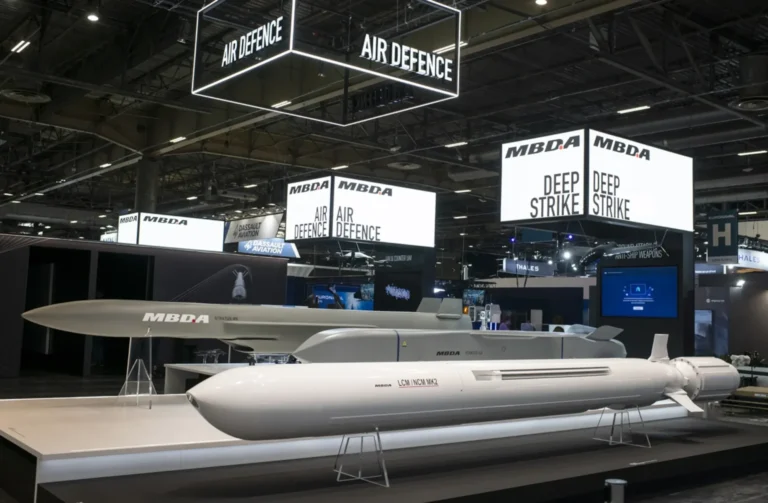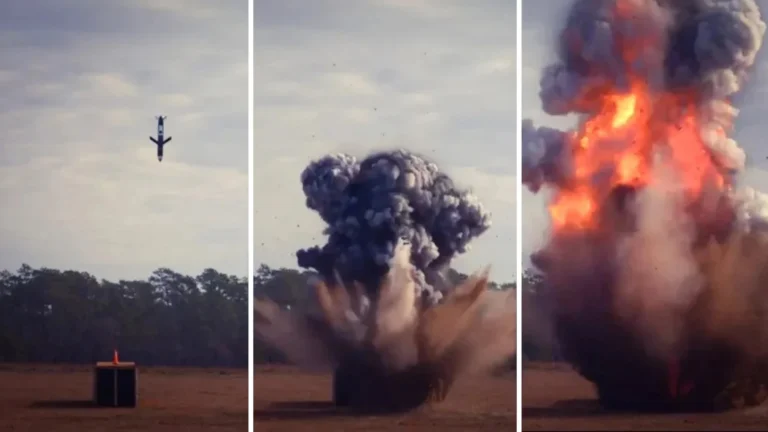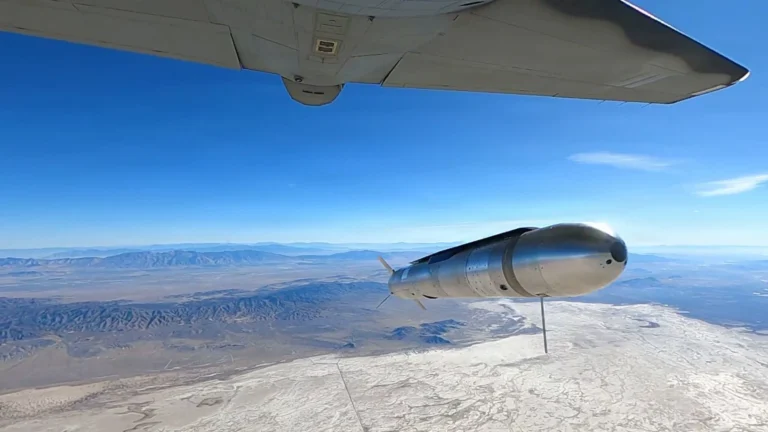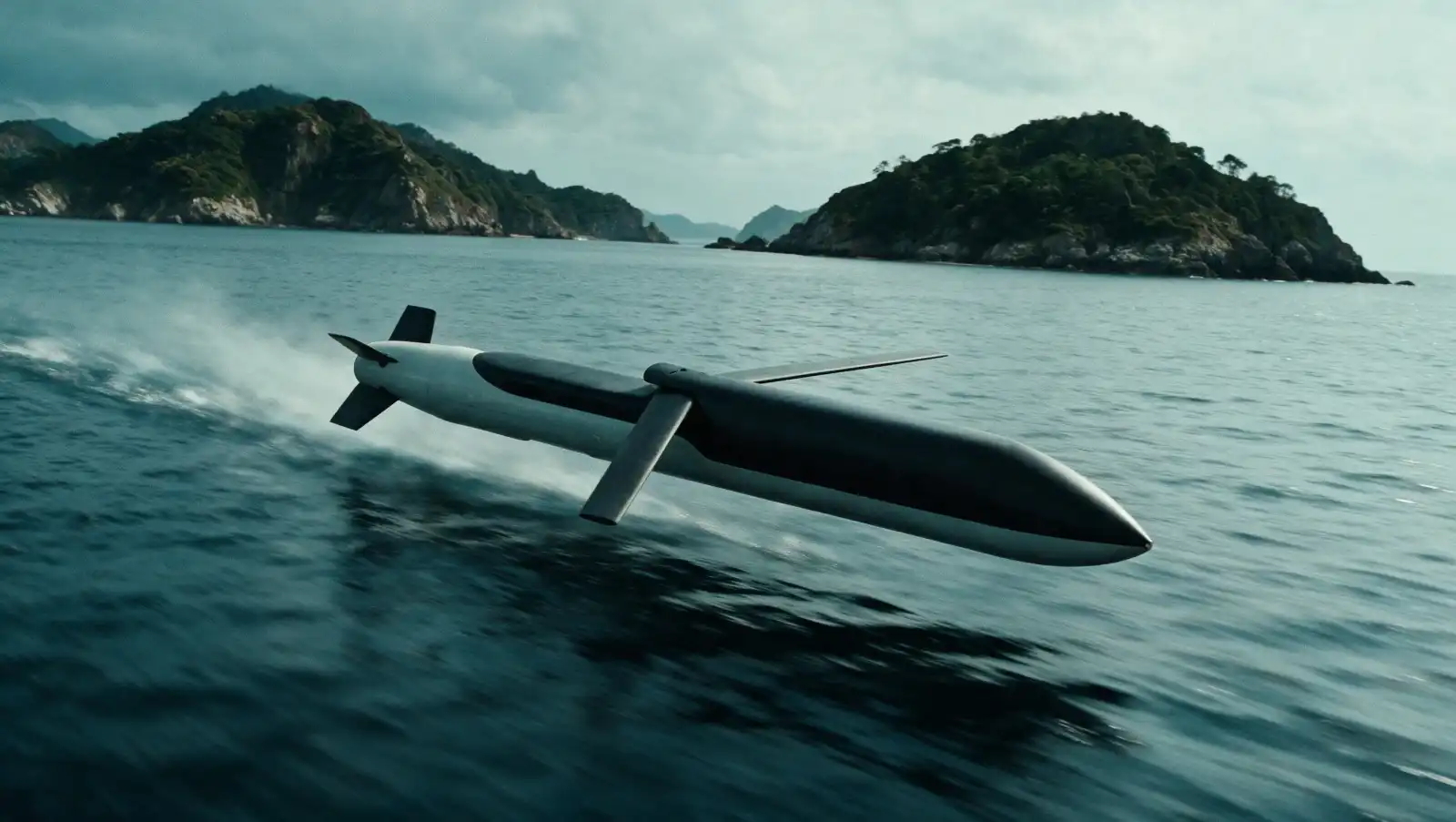
Rafael Advanced Defense Systems unveiled SUPER ICE on November 11, 2026, a long-range cruise missile armed with a 1,000-pound warhead compatible with the Mk 83 bomb standard. The Haifa-based company presents the weapon as the heavy-strike member of its ICE BREAKER family, designed for stand-off attacks on high-value strategic targets, including air defense systems, and launchable from aircraft, ships and ground-based launchers.
The new missile builds on a line Rafael opened with the ship- and land-launched SEA BREAKER in June 2021 and extended with the air-launched ICE BREAKER at the Farnborough International Airshow in July 2022. ICE BREAKER has since moved from marketing material to combat: Israeli business daily Globes reported in March 2026 that the missile had been documented in Israel’s operation in Iran. The family’s principal limitation has always been payload. SUPER ICE is Rafael’s answer to targets that a 250-pound warhead cannot reliably defeat.
SUPER ICE Cruise Missile Warhead and Guidance Architecture
The headline figure is the warhead. At 1,000 pounds, SUPER ICE carries four times the 250-pound charge publicly attributed to ICE BREAKER. Mk 83 compatibility places it in the same class as the NATO-standard general-purpose bomb used on guidance kits such as the GBU-32 Joint Direct Attack Munition and Rafael’s own SPICE 1000. That standard eases certification, fuzing and storage for air forces already handling Mk 83 bodies. Rafael has not said whether the operational warhead is a blast-fragmentation unit, a penetrator, or offered in both configurations, a distinction that determines the missile’s effect against buried command posts and hardened aircraft shelters.
Guidance relies on an electro-optical seeker using high-accuracy image matching, combined with autonomous navigation, low-altitude terrain-following flight and all-weather operation, according to the company. Image matching, in which the seeker compares the live scene with stored reference imagery, is the approach Rafael has fielded across the SPICE family, and it delivers terminal precision without depending on satellite navigation. Publicly available specifications indicate that ICE BREAKER fuses inertial navigation, terrain contour matching and anti-jam GPS, and maintains a two-way datalink for in-flight retargeting, mission abort and battle damage assessment. The SUPER ICE announcement does not confirm a datalink, though full commonality with the family’s mission-planning infrastructure points to a closely related architecture.
Range, Weight, and Launch Platforms Rafael Has Not Disclosed
Rafael released no figures for range, length, launch weight, propulsion or speed. That gap matters, because the warhead alone reshapes the airframe. Publicly available specifications put ICE BREAKER at about 4 meters long and under 400 kg at launch, with high-subsonic speed and a range of up to 300 km. A 1,000-pound warhead weighs about 454 kg, more than the entire ICE BREAKER missile, so SUPER ICE necessarily occupies a heavier weight class with a larger airframe and likely a more powerful engine. Whether Rafael preserved the 300 km reach or extended it is the single most important unknown in the announcement.
Gad Geva, head of Rafael’s Air Systems Division, said SUPER ICE was developed for integration across “a wide range of aerial platforms” without significant modifications to the aircraft, and that its multi-domain design allows launch from air, sea or ground-based launchers. The company named no aircraft. ICE BREAKER was designed to fit aircraft already cleared for SPICE 1000, which gave it a broad footprint across F-15, F-16 and lighter combat fleets. A heavier SUPER ICE will likely demand higher-rated pylons, which could narrow the list of compatible aircraft. Rafael stresses that the missile shares launch systems, mission planning and logistics with the rest of the family, which it says lowers life-cycle costs for existing operators.
How SUPER ICE Compares With JASSM, Storm Shadow, and Taurus
The 1,000-pound class puts SUPER ICE alongside the principal Western air-launched cruise missiles. Publicly available specifications indicate that the Lockheed Martin AGM-158 Joint Air-to-Surface Standoff Missile (JASSM) carries the 1,000-pound WDU-42/B penetrating warhead over roughly 370 km, with the extended-range JASSM-ER exceeding 900 km. The Anglo-French Storm Shadow/SCALP-EG carries a 450 kg-class BROACH tandem warhead beyond 250 km, while the German-Swedish Taurus KEPD 350 delivers a 481 kg MEPHISTO warhead at more than 500 km. Without a range figure, SUPER ICE cannot yet be placed precisely within that field.
Rafael chairman Yuval Steinitz tied SUPER ICE to the POPEYE family, which entered US Air Force service as the AGM-142 Have Nap, and called the new weapon “the best cruise missile of its kind in the world.” The more concrete selling point lies in the pairing Geva described, which lets customers select the appropriate weapon for each target. In practice, operators could assign the 250-pound ICE BREAKER to radars, launchers and ships and reserve SUPER ICE for larger or better-protected structures, using a single mission-planning system. Steinitz specifically cited air defense systems as targets, consistent with strike packages that open corridors before follow-on munitions arrive.
Analysis: SUPER ICE turns ICE BREAKER from a single weapon into a tiered stand-off strike family, and that is its main strategic value. Israeli operations against Iran in 2025 and 2026 placed a premium on stand-off volume and on matching warhead size to target hardness at range, precisely the problem a light and a heavy missile sharing planning infrastructure addresses. For export customers, the family offers a 1,000-pound-class cruise missile outside US and European supply chains, an attractive option for air forces facing delivery queues or licensing constraints on JASSM, Storm Shadow or Taurus. The offer is only as strong as the undisclosed range, however: a SUPER ICE confined to the 300 km class would complement, not rival, JASSM-ER and Taurus.
The next milestones are disclosure and integration. Rafael has not stated SUPER ICE’s range, flight-test status, initial operational capability date or launch customer, nor whether the Israeli Air Force has placed an order. Key indicators include the first named aircraft integration, any ground- or ship-launched demonstration, and whether Rafael routes the missile through a US production partner, as it did with General Atomics on the Bullseye stand-off weapon unveiled in April 2025, to reach markets funded through US security assistance.