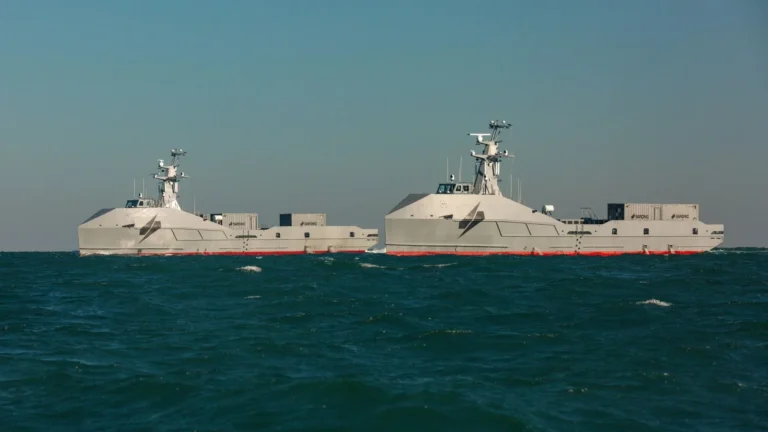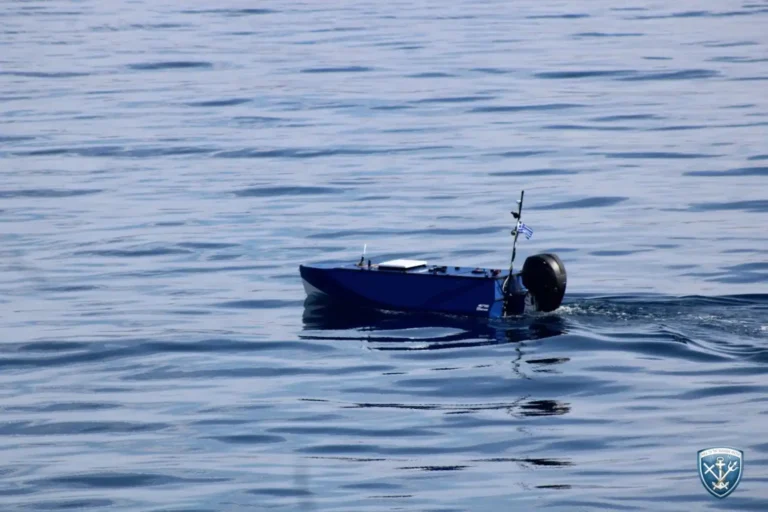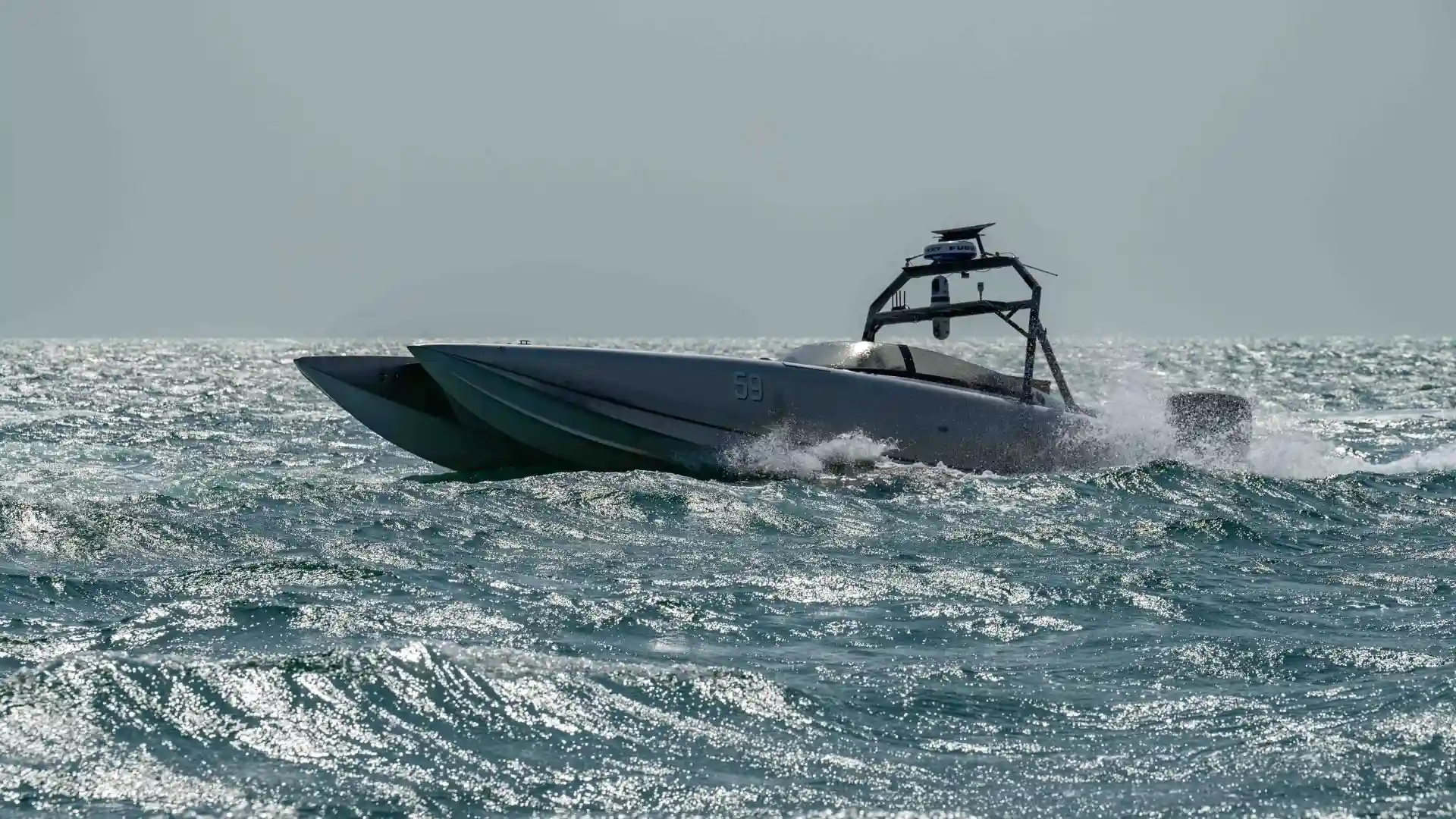
The United States handed two Devil Ray T38 unmanned surface vessels (USVs), valued at more than $8 million, to the Armed Forces of the Philippines (AFP) on November 4, 2026, in Subic Bay, Zambales. U.S. Ambassador to the Philippines Lee Lipton delivered the craft to Brigadier General Bayani V Curaming, Deputy Commandant of the Philippine Marine Corps (PMC), at the newly opened Maritime Tactical Systems, Inc. (MARTAC) Unmanned Center of Excellence, according to the U.S. Embassy in Manila.
The transfer comes as Washington and Manila mark 80 years of diplomatic relations and 75 years of the 1951 Mutual Defense Treaty, and as Philippine forces continue to face Chinese Coast Guard and maritime militia pressure around Second Thomas Shoal and other contested features in the West Philippine Sea. It also extends a U.S.-supplied unmanned fleet that began in 2024, when the AFP received one Devil Ray T38 and four smaller MANTAS T12 craft under U.S. security assistance, operated by the Philippine Navy’s Unmanned Surface Vessel Unit at Naval Operating Base Subic.
Devil Ray T38 Specifications: Speed, Payload, and Autonomy
Built by Florida-based MARTAC, the Devil Ray T38 is an 11-meter (38-foot) USV capable of speeds above 60 knots and a maximum payload of 1,814 kilograms (4,000 pounds), per the embassy. It runs under remote control or autonomously and supports surveillance, reconnaissance, mine clearance, and logistics missions.
Publicly available specifications indicate the craft uses a carbon-fiber catamaran hull with twin inboard engines, with a choice of diesel or gasoline powertrains. The twin-hull layout provides a wide beam and reduced roll, which matters for sensor stability and station-keeping in the rougher sea states common across the archipelago. MARTAC also markets the T38 as a host platform able to launch and recover smaller USVs such as its MANTAS T12.
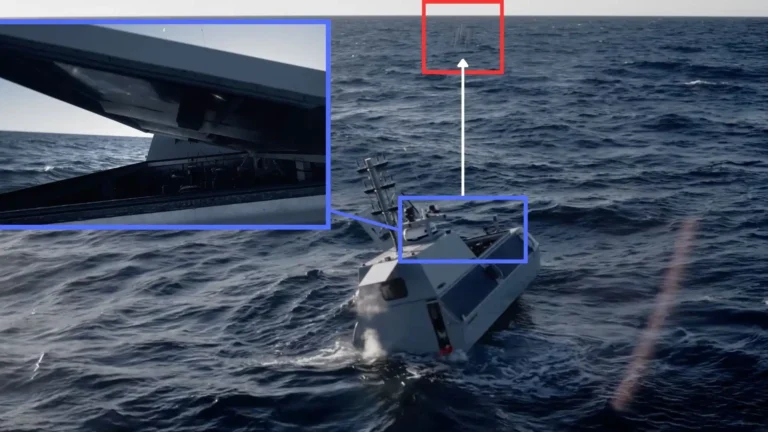
Endurance has long been the open question for small, fast USVs. In May 2026, MARTAC reported that a T38 operated by the U.S. Navy’s Point Mugu Sea Range completed an eight-day, fully autonomous mission off California with no escort vessels, averaging just over 4 knots and riding out Sea State 5 conditions. The company said the run confirmed an operational range exceeding 2,400 nautical miles on an endurance profile. Those figures are manufacturer-reported and have not been independently verified.
For Manila, the combination is the point: sprint speed for response, and a loiter profile long enough to keep a sensor on a contested feature for days. Colonel Daniel Oh, the U.S. Embassy’s Senior Defense Official and Chief of the Joint U.S. Military Assistance Group-Philippines (JUSMAG-P), said the vessels would expand the AFP’s “ability to monitor wider areas of Philippine waters for longer periods at a lower cost than crewed vessels.”
How MARTAC’s Subic Center Anchors a Growing Philippine USV Fleet
The venue carries as much weight as the hulls. MARTAC said on November 9 that the Subic Bay center will train PMC personnel, perform system maintenance, and stock spare parts, with the stated aim of sustaining availability and enabling rapid deployment. The company has described the facility as groundwork for a much larger Philippine USV fleet over the coming years.
In-country sustainment addresses a familiar weakness of donated equipment: platforms sitting idle while parts ship from the United States. Subic Bay already hosts the Philippine Navy’s unmanned unit, giving both services a shared maintenance and training hub. Industrial capacity is moving in parallel; in September 2026, MARTAC announced a partnership with Solace Boats to add production capacity for 100 Devil Ray USVs per year.
Curaming said the turnover reflects “the growing importance of emerging technologies in addressing the evolving demands of maritime security.” The embassy did not disclose the funding mechanism for this transfer, the sensor or payload fit of the two craft, or which PMC unit will operate them. Earlier Philippine USVs were provided through U.S. Foreign Military Financing.
Analysis: Placing T38s with the Philippine Marine Corps, rather than only with the Navy’s unmanned unit, pushes autonomous intelligence, surveillance, and reconnaissance (ISR) closer to the forces that hold the archipelago’s littoral and island positions. The PMC’s Coastal Defense Regiment also fields the BrahMos shore-based anti-ship missile, and a persistent, low-cost surface sensor loitering beyond the horizon could in time feed that kill chain with track data. That is an inference from force structure, not a stated plan. The nearer-term effect is presence without exposure: unmanned patrols let Manila watch contested features without putting sailors or Marines in the path of water cannon and ramming.
Next milestones include the operational assignment of the two craft, any integration with Navy USV operations in Palawan, and whether further deliveries flow through the new MARTAC center. The size and funding of a follow-on tranche, and whether Manila shifts from donated platforms to its own procurement under its modernization program, remain unconfirmed.