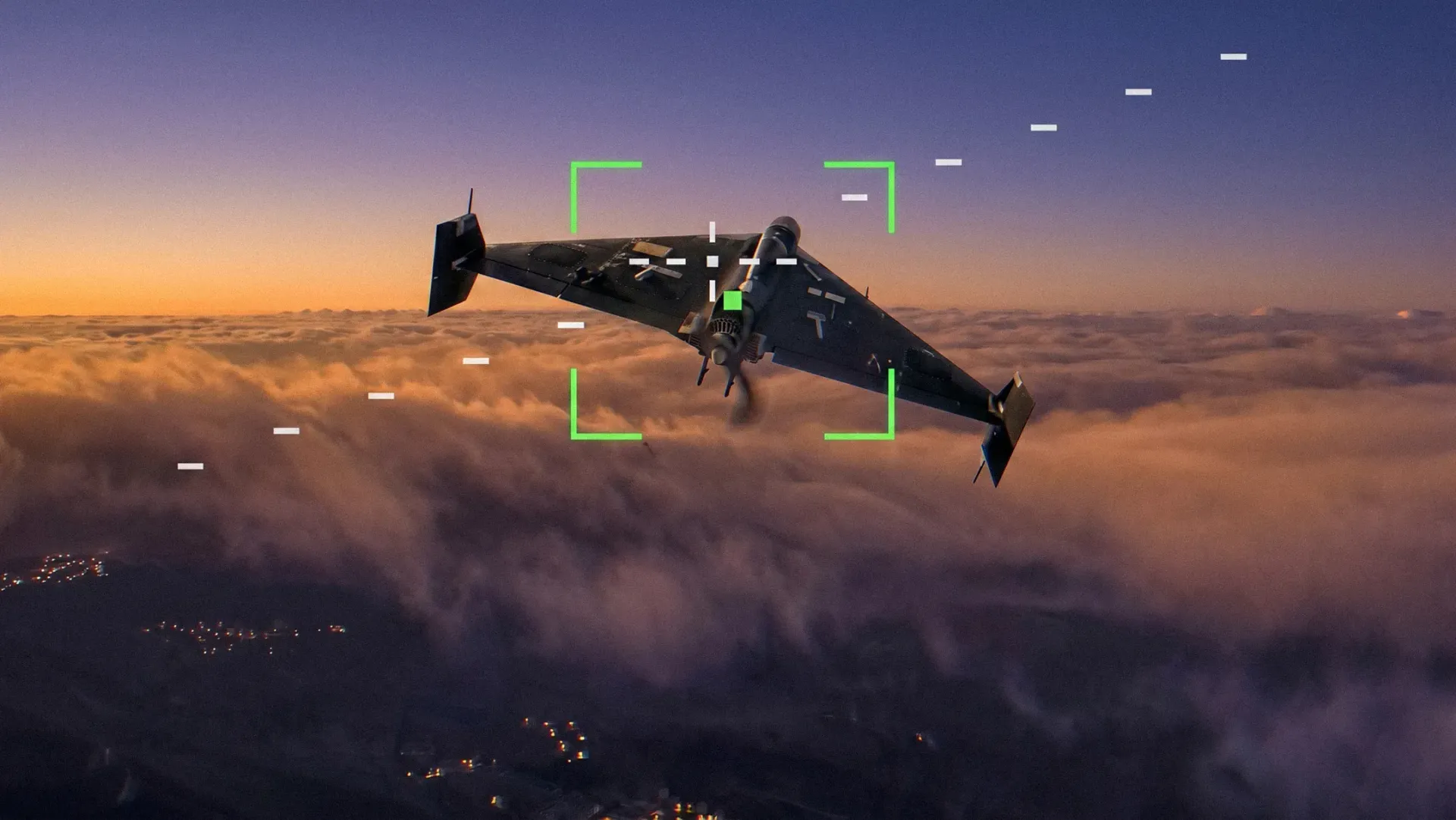
Ukraine has selected the first prototypes of a dedicated jet Shahed interceptor, approved its long-range strike operations for October, and set F-16 supply requirements through the end of the year, President Volodymyr Zelensky said on September 29, 2026, after meeting the Ministry of Defense and the officials who plan Ukrainian weapons production. The prototypes “can already become effective weapons,” Zelensky said, with timelines, funding, and production volumes still to be secured.
The decisions follow a sharp rise in Russian use of turbojet-powered Shahed variants ahead of a fifth wartime winter. On September 28, Zelensky put Ukraine’s overall drone interception rate at 70%, but only 57% against jet-powered Shaheds. Kyiv’s own deep-strike campaign is accelerating in parallel: after an overnight raid on the Gazprom Neft refinery in Moscow on September 20, Ukraine’s General Staff claimed that 45% of Russia’s refining capacity had been knocked out, a figure not independently verified. Targets, systems, and volumes in the October plan were not disclosed.
Jet Shahed Interceptor Prototypes Move Toward Funded Production
The threat is the Geran-3, Russia’s localized copy of Iran’s Shahed-238. According to Ukraine’s Defense Intelligence (HUR), the Geran-3 uses a Chinese Telefly JT80 turbojet for a speed of 300 to 370 km/h and an estimated range of up to 1,000 km, reaching top speed mainly in terminal dives and inside Ukrainian air defense zones. A 12-element Kometa-M12 controlled reception pattern antenna (CRPA) hardens its satellite navigation against jamming, and Ukrainian estimates place the warhead at 50 to 90 kg. The Brave1 defense innovation cluster assesses the follow-on Geran-4 at up to 500 km/h, against roughly 185 km/h for the piston-engine Geran-2.
That speed band is the operational problem. The low-cost electric interceptor drones and mobile fire groups Ukraine scaled against the Geran-2 lose engagement time against a target flying twice as fast, pushing defenders toward costlier missiles. Volume compounds it: Air Force spokesperson Yurii Ihnat said jet-drone use rose roughly fivefold in July over June, and Zelensky said Russia launched nearly 800 jet-powered drones in four days in late August.
Kyiv has pursued several designs in parallel. Defense Minister Yevhen Khmara said in late August that four interceptor platforms had been field-tested against jet Shaheds, and the Defense Ministry codified the Alexa Spatium, a reusable turbojet-powered interceptor, the same month. Zelensky reported successful test kills on September 15 and September 17, while noting that the interceptor’s control system still needed refinement. The September 29 decision appears to narrow that field to the first production candidates. Developers, unit cost, and production targets remain undisclosed.
Belgian F-16 Transfers Anchor Ukraine’s Year-End Aviation Packages
Zelensky said Kyiv is negotiating “specific aviation packages” with specific countries, without naming them or listing their contents. Hours earlier on September 29, he announced that Belgium will transfer three F-16s by the end of 2026 under an accelerated procedure, and that urgent F-16 ammunition deliveries had already arrived from Belgium and Spain. No delivery date was given for the aircraft, further munitions, or the wider packages.
The Belgian aircraft are the first tranche of a pledge of 30 F-16s by 2028 that has slipped repeatedly because Brussels tied each release to the arrival of its F-35A replacements. The Netherlands, Denmark, and Norway supplied the bulk of Ukraine’s current fleet under earlier pledges of 24, 19, and six aircraft respectively. Publicly available specifications indicate the Belgian jets are F-16AM/BM aircraft upgraded to the Mid-Life Update (MLU) standard, with the AN/APG-66(V)2 radar, Link 16, and an F100-PW-220E turbofan rated at roughly 23,800 lbf (106 kN) in afterburner. That matches the MLU jets already in Ukrainian service, easing spares, weapons integration, and pilot conversion.
Ukraine already commits F-16s against drones when ground-based means fall short. The internal M61A1 20 mm cannon offers a cheap kill, but faster targets shrink gun windows and shift the load to AIM-9 and AIM-120 missiles that cost many times more than the drones they destroy. Ammunition flow, not airframe count alone, determines what each sortie contributes. Kyiv does not publish its F-16 inventory or losses, so the net effect of three more airframes cannot be assessed from open sources.
Analysis: The three decisions describe one problem: Ukraine’s air defense cost-exchange ratio is deteriorating as Russia moves up the speed curve. The inexpensive interceptor model that absorbed mass Geran-2 raids does not transfer cleanly to a 370 km/h target, and every jet Shahed that leaks through the drone layer consumes a surface-to-air missile or an F-16 sortie. Attaching funding and production volumes to selected prototypes is an attempt to turn a technology gap back into a manufacturing contest, where Kyiv has proven competitive. The long-range campaign attacks the same equation from the other end, targeting the fuel and industrial base behind Russian strike tempo.
October offers the first measurable test. Key markers are whether the jet Shahed interception rate rises above 57%, whether Kyiv names developers and contract volumes for the selected interceptor, when the Belgian F-16s arrive and which partners stand behind the other aviation packages, and whether Russia masses faster Geran-4 variants as it prepares a winter campaign pairing ballistic missiles with jet-powered drones.