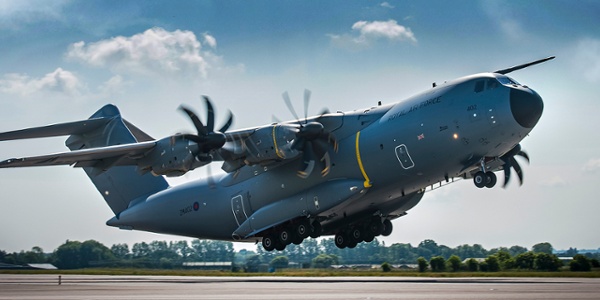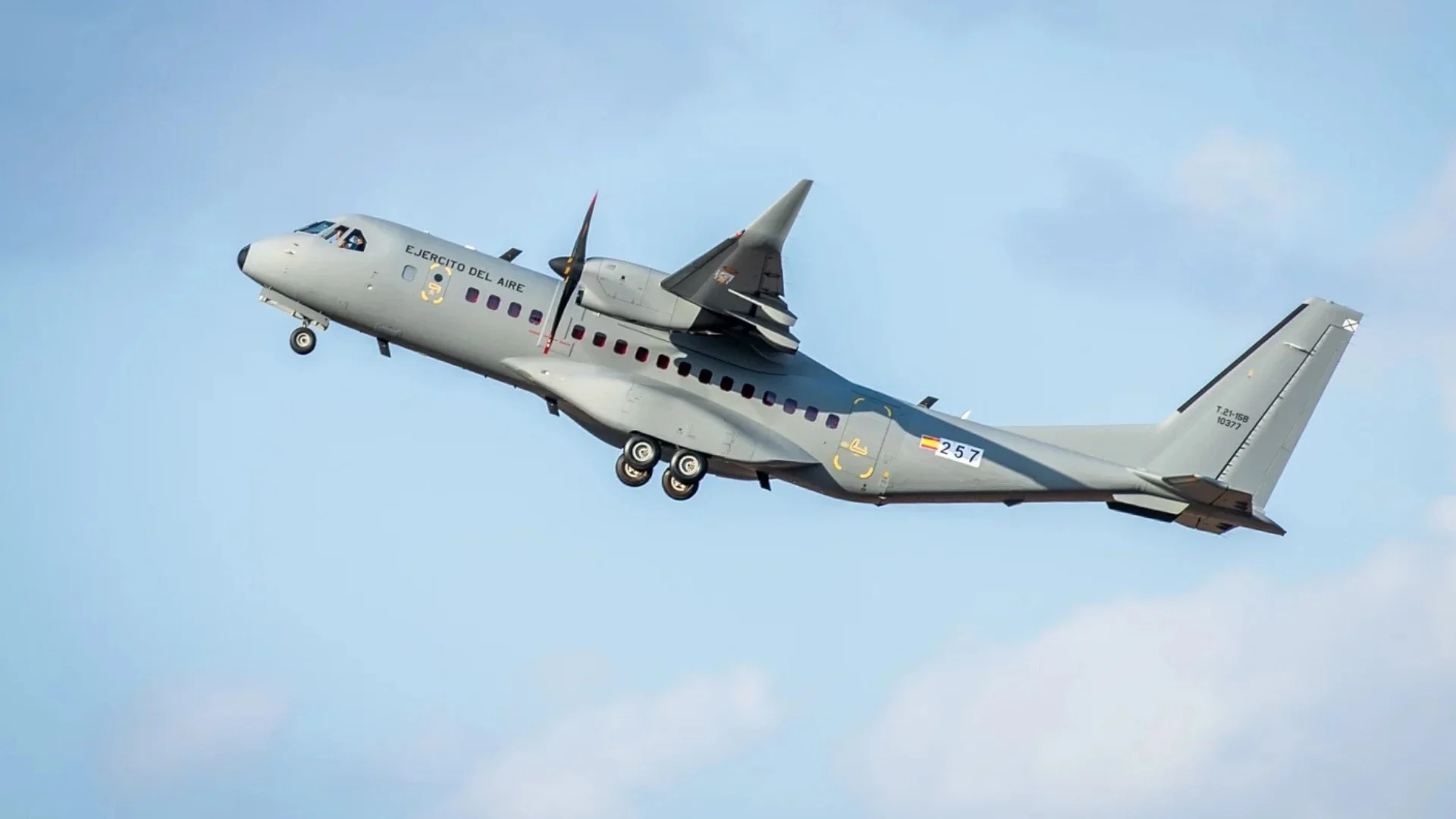
Airbus Defence and Space has completed the maiden flight of the first C295 in transport configuration built for the Spanish Air and Space Force (Ejército del Aire y del Espacio, EdAE), the first of 18 aircraft Spain’s Ministry of Defence ordered in December 2025. It is earmarked for the Military Air Transport School (Escuela Militar de Transporte Aéreo, EMTA) at Matacán Air Base near Salamanca, where it will take over crew training and the transport of personnel, paratroopers, and cargo from the CN235. Delivery is scheduled before the end of 2026.
The contract, announced by Airbus on December 23, 2025, under the ITS-T program, replaces the EdAE’s aging CN235 and C212 fleets used to train transport crews and paratroopers. Spain’s Directorate General of Armament and Material (DGAM) formalized it at €1.21 billion, including ground training systems and support. Once deliveries conclude, the EdAE will operate 46 C295s in transport, maritime patrol, and surveillance configurations, making Spain the type’s second-largest operator after India.
How the C295 Transport Aircraft Replaces the CN235 at Matacán
The order is split into two batches tailored to distinct training missions. The first batch goes to EMTA at Matacán, where the CN235 currently handles multi-engine transport instruction alongside passenger, paratrooper, and cargo flights. Deliveries to Matacán run from 2026 to 2028.
The second batch will equip the Méndez Parada Military Parachuting School at Alcantarilla Air Base in Murcia, replacing the C212 for manual and automatic paratrooper and cargo drops. Those aircraft are due between 2030 and 2032.
The aircraft are only part of the package. Airbus will supply a ground training system comprising several flight simulators, computer-aided instruction tools, and training management software for both schools. The contract also covers fleet maintenance, materiel management, and operation of the training center at the transport school through December 2032.
Crews posted to the C295s of the EdAE’s 35th Wing at Getafe currently train on the CN235 first; training directly on the C295 removes that conversion step for them.
Payload, Range, and Short-Field Performance of the C295
According to Airbus, the transport variant carries 70 troops or 50 paratroopers, operates from unprepared strips, performs cargo and paratrooper drops, and can be configured for casualty evacuation. Publicly available manufacturer specifications indicate the following parameters:
- Powerplant: two Pratt & Whitney Canada PW127G turboprops rated at 2,645 shp each, rising to 2,920 shp with automatic power reserve
- Weights: 23,200 kg maximum takeoff weight and up to 9,000 kg maximum payload, depending on configuration
- Cabin: 12.69 m unobstructed length, 2.70 m wide and 1.90 m high, accommodating five standard 88 x 108 in pallets
- Performance: 260 kt cruise speed and a 25,000 ft service ceiling
- Range: 6,000 kg over 2,000 nm, 3,000 kg over 2,700 nm, or 3,100 nm in ferry configuration
- Field performance: takeoff run of about 670 m and landing run of about 320 m at sea level
The step up from the CN235 is substantial. Publicly available figures put the CN235’s maximum payload at roughly 6,000 kg, so the C295, a stretched derivative of the same CASA design lineage, adds about 50 percent more lift and roughly 3 m of cabin length. For a training school, the gain is less about tonnage than fidelity: instructors can teach heavier airdrop profiles, pallet loading, and austere-field procedures that match what crews will fly operationally, without a type change at the end of the pipeline.
Analysis: Spain is consolidating its medium airlift, maritime patrol, and search and rescue fleets around a single domestically assembled airframe, with the first C295 search and rescue variant delivered to the EdAE in mid-2026 and now the first transport trainer airborne. The approach trades platform diversity for commonality across crews, simulators, spares, and maintenance, a tangible cost and readiness benefit for an air force that will train and operate on the same type. It also anchors workload at the Seville line into the early 2030s. The risk is concentration: a fleet-wide technical issue or a production bottleneck in Seville would now affect training, transport, and maritime missions at the same time.
The next milestones are delivery to Matacán before the end of 2026, completion of the first batch in 2028, and the start of C212 replacement at Alcantarilla in 2030. As approved by the Spanish government, the program assigns 12 aircraft to instruction and tactical transport and six to paratrooper and cargo drops.