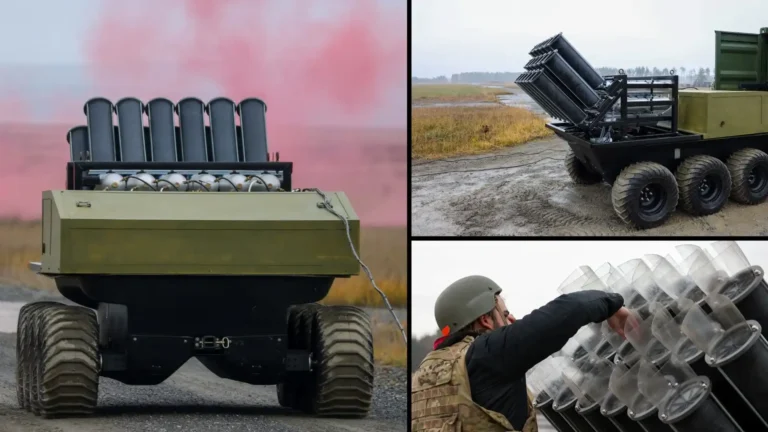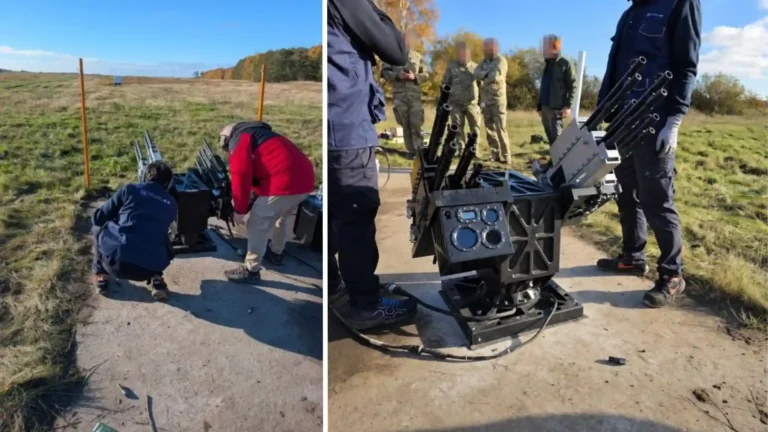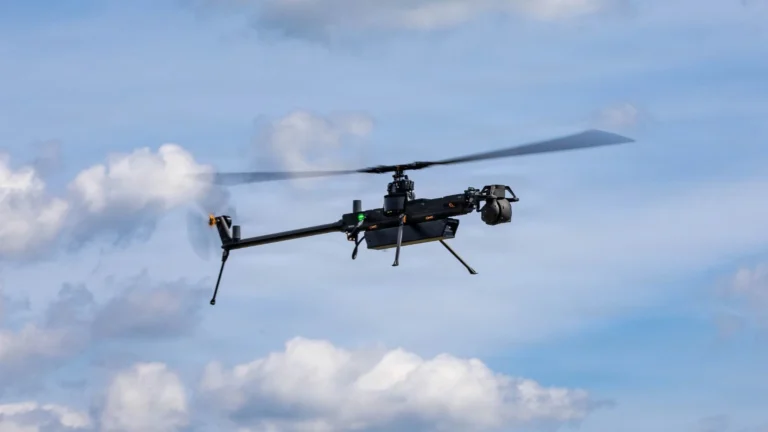
Poland’s Inspectorate of Unmanned Systems Forces (IWBSU) opened a call on November 13, 2026, inviting manufacturers to submit unmanned or manned-unmanned scatterable minelaying systems for testing with the Polish Armed Forces. Announcement No. 2/ZBLSU/2026, published on the Defence Ministry website, gives companies until November 30, 2026, to file applications, a 17-day window.
The call comes nine months after Poland’s withdrawal from the Ottawa Convention took effect on February 20, 2026. Warsaw ratified the treaty in 2012 and destroyed its anti-personnel mine stockpile by 2016. Deputy Defense Minister Paweł Zalewski said in December 2025 that Poland would resume production of anti-personnel mines for the first time since the Cold War, and the government plans to integrate minefields into the East Shield fortification program along the borders with Belarus and Russia’s Kaliningrad exclave. Prime Minister Donald Tusk said on February 19 that Poland could mine its eastern border within 48 hours if a threat emerged. Emplacement at that speed depends on delivery systems, which is what the new announcement targets.
How the Unmanned Minelaying Systems Trials Will Be Run
The call is issued under Decision No. 123/MON of September 12, 2025, which sets the organization and procedures for testing unmanned aerial vehicles, unmanned weapon systems, and counter-unmanned systems across the Polish Armed Forces. The framework rests on four principles. Tests are decentralized and may run simultaneously at several locations across the country. They are to be fair, transparent, and competitive. Applicants pass a simplified vetting process run by the competent services for counterintelligence protection. The IWBSU, which sits under the General Command of the Armed Forces, verifies applications and conducts formal and substantive assessments.
The inspectorate has formally operated within the General Command since January 1, 2025, and coordinates the acquisition of unmanned solutions for testing. In February 2026, it issued Announcement No. 1/ZBLSU/2026, inviting applications for unmanned land weapon systems. The new call narrows the requirement to a single mission: scatterable mine emplacement.
The public notice leaves major parameters open. It does not specify mine types, payload, emplacement rate, control architecture, quantities, test dates, or budget. The announcement text does not define the platform type, but the ministry page publishing it is titled “Testing of Unmanned Ground Weapon Systems (UGV).” The web notice is accompanied by a downloadable copy of the announcement.
Bluszcz and Baobab-K Set the Baseline for Polish Mine Warfare
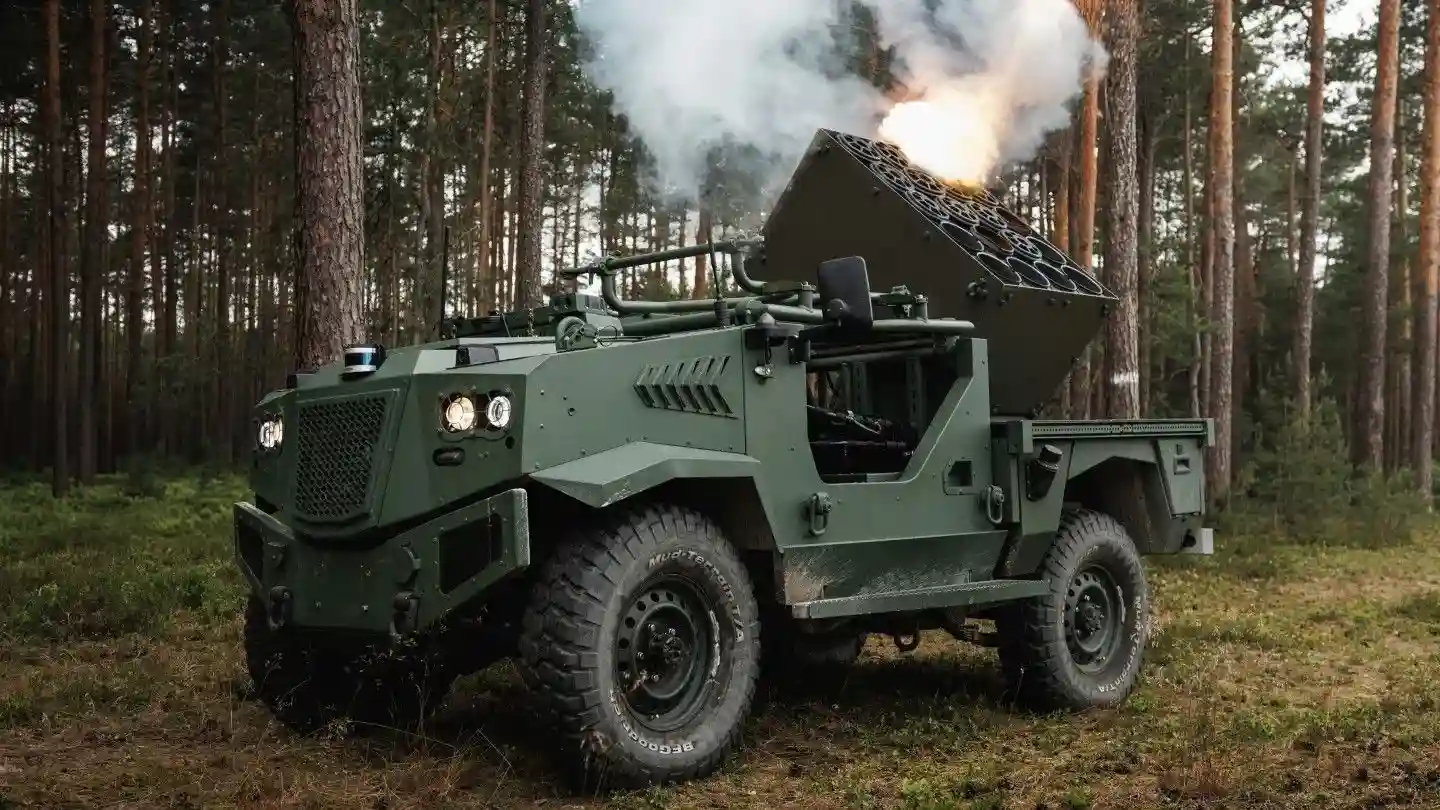
Poland already fields one scatterable system and has trialed an optionally crewed one. The Baobab-K, built by companies of the Polish Armaments Group (PGZ), carries 600 Belma MN-123.1 and MN-123.2 programmable anti-tank mines, can lay a minefield up to 1,800 meters long in under 22 minutes, and can be reloaded in under 30 minutes.
The Bluszcz, developed by Belma, STEKOP, the Military Institute of Armoured and Automotive Technology, and the Military Institute of Engineering Technology, is the closest existing match to the new requirement. Publicly available specifications indicate a 4×4 vehicle built on the TAero platform, which uses Toyota Land Cruiser HZJ70 components including a 4.2-liter, 130 hp diesel engine. A 50 kW electric drive provides up to 30 km of silent movement. The launcher carries 20 cassettes of five MN-123 anti-tank mines, 100 mines in total, laid in strips 30 to 90 meters wide at adjustable density. The STEKOP-developed CSSP control system combines autonomous navigation, optical and infrared cameras, and data links, and records the coordinates of each minefield. The armed forces evaluated the Bluszcz during Exercise Iron Defender 2025, and Tusk presented it on February 19, 2026, the day before the Ottawa withdrawal took effect.
The announcement does not say whether the call is meant to qualify the Bluszcz or to widen the supplier base beyond it.
Analysis: The call shows Warsaw treating mine emplacement as a mission where uncrewed systems should carry the risk. On a battlefield saturated with reconnaissance drones and loitering munitions, a crewed minelayer working near the line of contact is an exposed, easily tracked target, as the war in Ukraine has repeatedly shown. An open, competitive test track also fits the government’s stated goal of self-sufficiency: pairing domestically produced mines with domestic delivery platforms would let Poland execute its East Shield minefield plan without depending on foreign suppliers. The short submission window signals that the inspectorate wants candidates on test ranges quickly.
The next milestone is the November 30 deadline, after which the IWBSU will assess applications before selecting systems for decentralized trials. Open questions include which mine types fall within scope, in particular whether anti-personnel munitions are covered, how many systems the armed forces intend to acquire, and on what timeline. Contracts Poland signed in May 2026 under the European Union’s SAFE loan instrument already include anti-tank mines and mine-laying equipment for East Shield.