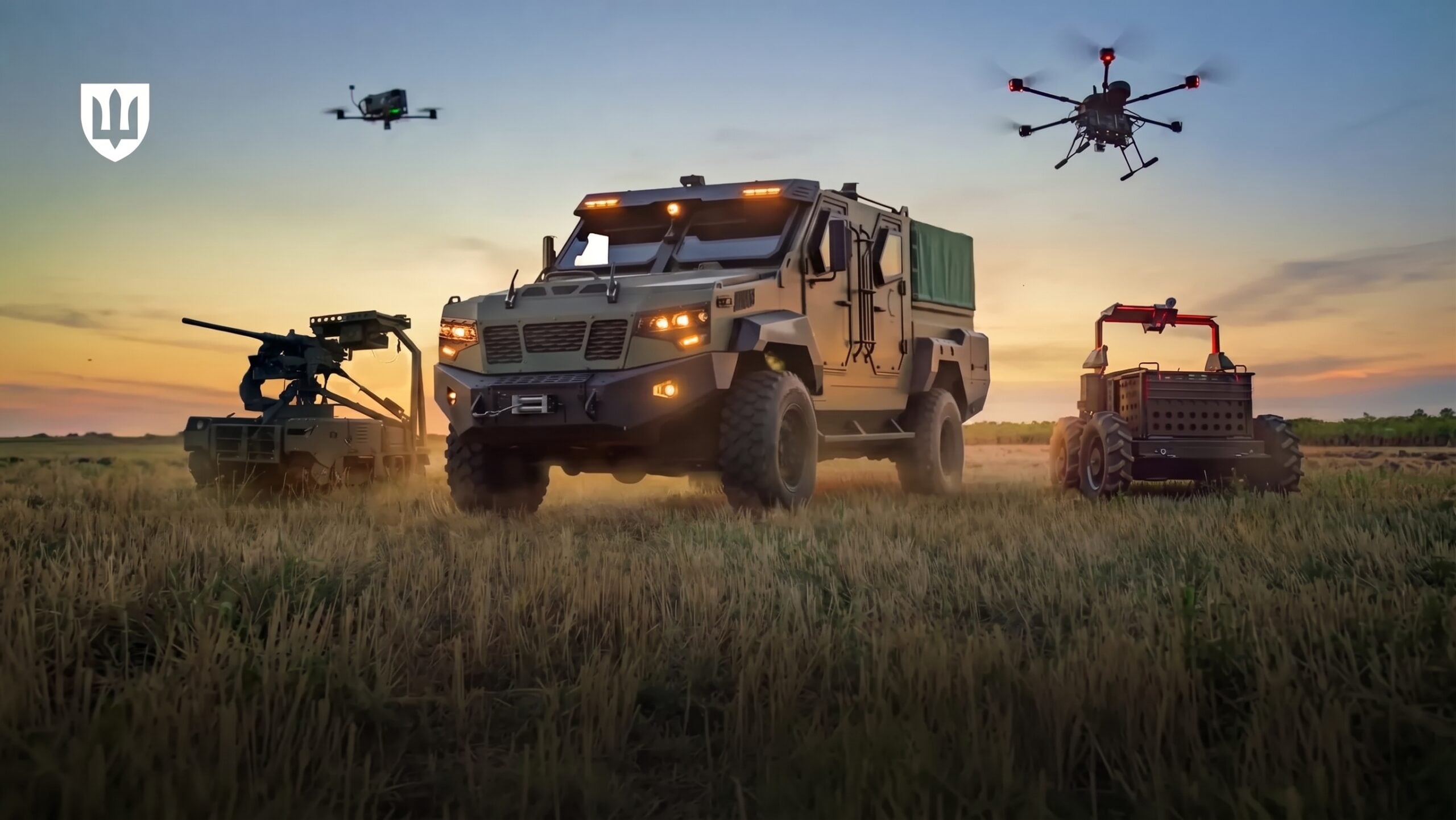
Ukraine’s Ministry of Defense codified and authorized 1,678 new weapons and military equipment (WME) models for operational use between January 1 and September 25, 2026, and 1,530 of them, or 91.2%, were produced by Ukrainian companies, the ministry said on October 2, 2026. The domestic count is 25.5 times the 60 Ukrainian-made models approved in 2022.
Codification is the gate between a working product and a state contract. Once a model is codified, it enters the Catalog of Supply Items with a NATO nomenclature number, and the ministry or other security and defense agencies can buy it with state budget funds. Kyiv cut the procedure from several months to 20 days in November 2023 and to 10 days in May 2024. On March 2, 2026, the Cabinet of Ministers decoupled technical evaluation from formal state requirements, allowing a product to be codified regardless of existing procurement plans.
Ukraine Weapons Codification Volumes by Year, 2022 to 2026
The ministry’s annual data trace the expansion of the domestic pipeline since Russia’s full-scale invasion in February 2022:
- 2022: 110 models, including 60 Ukrainian-made (54.5%)
- 2023: 480 models, including 295 Ukrainian-made (61.5%)
- 2024: 1,409 models, including 1,051 Ukrainian-made (74.6%)
- 2025: 2,050 models, including 1,427 Ukrainian-made (69.6%)
- 2026, through September 25: 1,678 models, including 1,530 Ukrainian-made (91.2%)
The 1,530 domestic approvals logged in under nine months already exceed the 1,427 recorded across all of 2025. The domestic share has risen 36.7 percentage points since 2022, which the ministry expresses as a 67.3% relative increase. Total volume has not yet overtaken 2025, but the period comparison favors 2026: the ministry codified 1,526 models in the first eight months of this year against 983 in the same window of 2025, a 55% increase.
The series also contains a shift the ministry has not explained. Its own figures put the domestic share at 86% for January through August 2025, yet the full-year share fell to 69.6%. That implies roughly 1,067 models codified in the last four months of 2025, only about 55% of them Ukrainian-made. Foreign-made approvals have since dropped sharply, to 148 through September 25, 2026, from 623 in 2025. The ministry has not said whether this reflects fewer new foreign types entering service, a change in how partner-supplied equipment is processed, or both.
Drones and Ammunition Lead the 2026 Codification Mix
The latest category breakdown covers January through August. Unmanned aerial systems (UAS) led with 565 Ukrainian-made types, followed by 256 ammunition variants, 139 communications systems, 86 unmanned ground vehicles (UGVs), 64 electronic warfare (EW) and signals/electronic intelligence (SIGINT/ELINT) systems, 52 vehicles, 48 armored and special-purpose armored vehicle models, and 37 optical equipment models. Non-lethal approvals added 26 rear-support models, 21 training systems, 19 engineering and demining models, 10 maintenance models, and three radiological, chemical, and biological protection models. These categories account for 1,326 of the 1,526 models; the ministry did not classify the remaining 200.
Drone data run to September 22, when the UAS total reached 650. Strike copters led with 238 models, low-cost precision weapons for hitting personnel and equipment at the front. Another 231 were fiber-optic controlled UAVs, whose wired link cannot be jammed by radio-frequency EW, at the cost of range bounded by spool length. The ministry also cleared 42 interceptor drones for low-cost counter-UAS defense, 32 middle-strike UAVs for attacking Russian logistics in the operational rear, and nine deep-strike drones for targets inside Russia.
The mix tracks the March reform. For UAS and tactical-level EW, a manufacturer-issued quality certificate is now sufficient for procurement without further state oversight, and the manufacturer carries full responsibility for quality. Ammunition can be codified without new demonstration trials if a state customer took part in earlier ones, and explosives now fall under the simplified procurement framework. Recent individual approvals include the INGUAR-4 armored recovery vehicle, designed to recover most Ukrainian and foreign-made special armored vehicles, an upgraded UAT.GYURZA-02 armored vehicle with AI capabilities, and Alexa Spatium, which the ministry describes as Ukraine’s first jet-powered drone interceptor.
Analysis: Codification counts measure market access, not battlefield mass. A codified model is eligible for state purchase; it is not a contract, and the ministry has not disclosed how many of the 1,530 domestic models have received orders or in what quantities. What the figures do capture is the breadth of the supplier base. Mykhailo Fedorov, then defense minister, said in March that Ukraine had grown from seven drone manufacturers at the start of the full-scale invasion to more than 500, from two EW firms to 200, and from no private missile makers to more than 20. That breadth sustains rapid iteration against Russian countermeasures, but thousands of distinct types strain training, spare parts, and maintenance at brigade level, and self-certification for drones and tactical EW shifts the burden of catching defects to frontline feedback. The NATO nomenclature numbers attached to codified models also give allied buyers and co-production partners a standardized catalog reference.
A straight-line projection of the year-to-date pace points to more than 2,200 codifications in 2026, which would surpass the 2025 total, though the ministry has set no public target. The open questions are whether Evgeniy Khmara, confirmed as defense minister by the Verkhovna Rada on August 19, 2026, keeps the deregulated framework intact, whether the ministry begins publishing codification-to-contract conversion data, and how manufacturer self-certification performs as quality reports from the front accumulate.