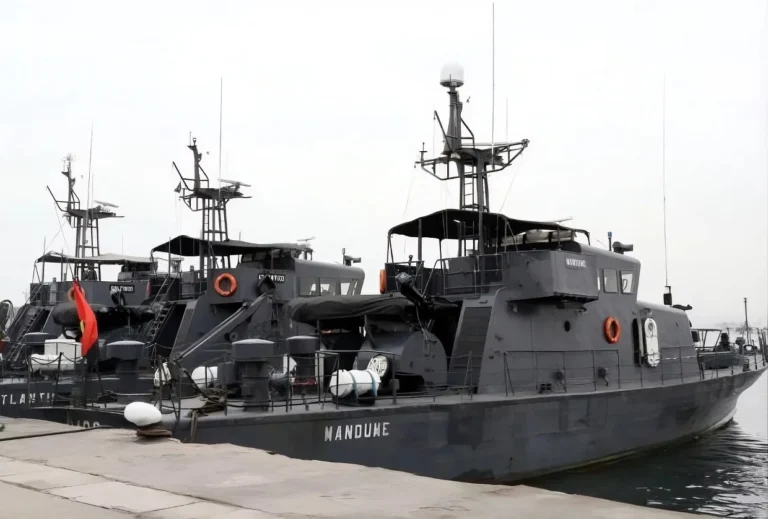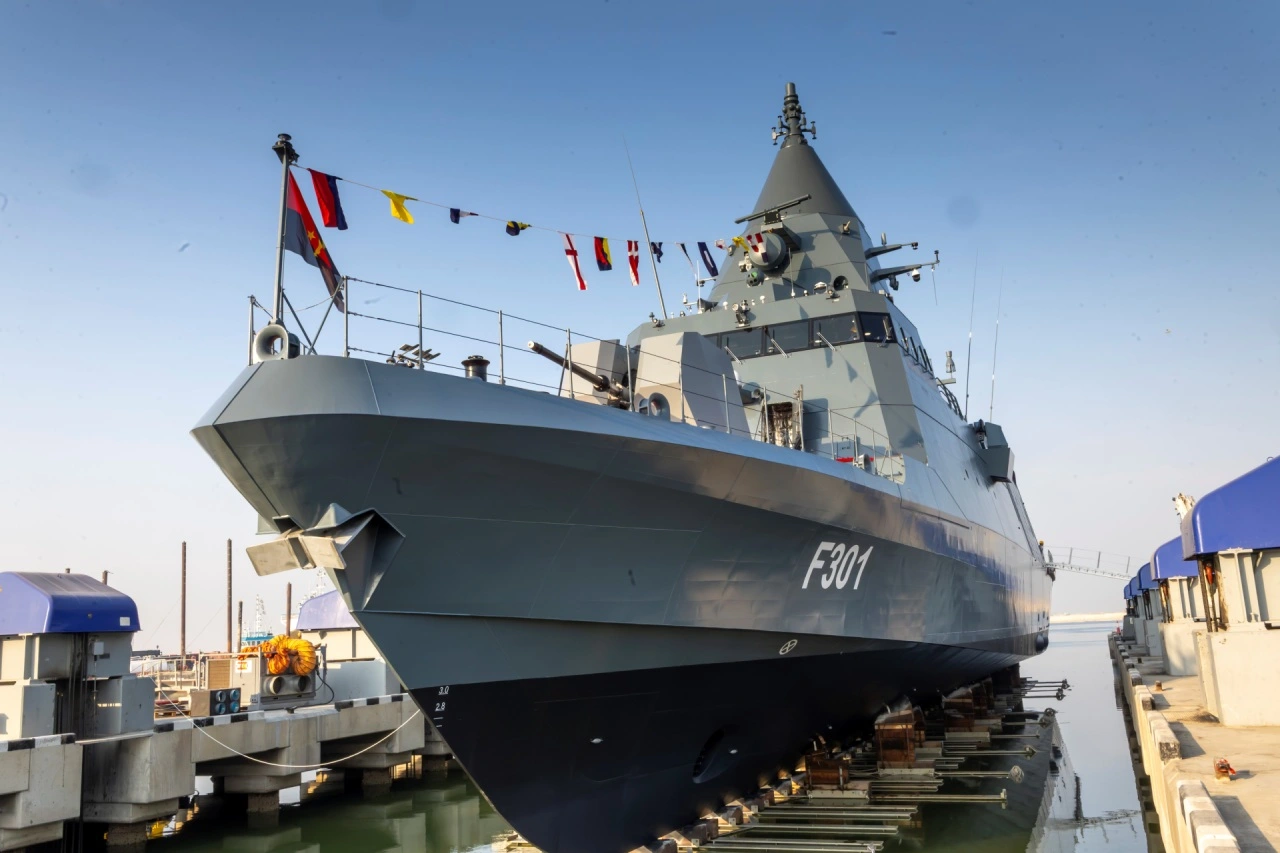
EDGE Group launched NRA Nimi-ya-Lukeni (F301), the second of three BR71 MK II multi-mission corvettes ordered by the Angolan Navy, at the Abu Dhabi shipyard of its naval subsidiary Abu Dhabi Ship Building (ADSB) on October 29, 2026. The 71-meter vessel is the first of its class built in the United Arab Emirates, constructed by ADSB following a transfer of technology from French shipbuilder CMN Naval.
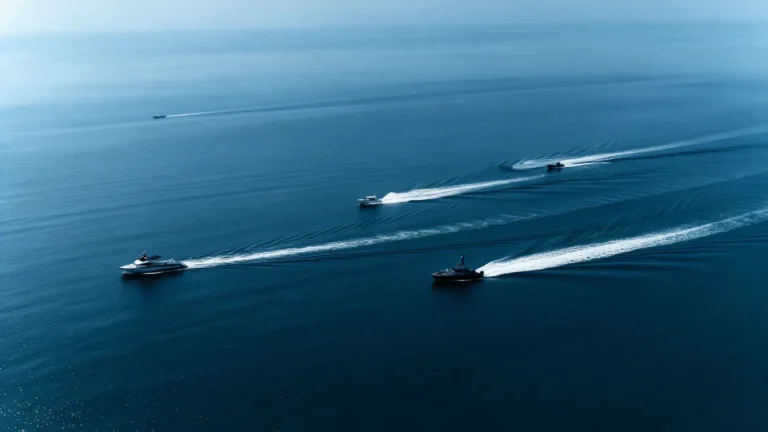
The launch moves Angola’s EUR 1 billion naval recapitalization program, signed in February 2023, past its second hull milestone. The first-of-class ship, NRA Ekuikui II (F300), was designed and built by CMN Naval and launched in Cherbourg, France, on March 4, 2026. ADSB acts as prime contractor and has already delivered 12-meter and 16-meter high-speed interceptors under the same contract.
BR71 MK II Corvette Design, Sensors, and Weapons Fit
The BR71 MK II is an evolution of the Baynunah class, which CMN and ADSB delivered to the UAE Navy in six hulls. Publicly available specifications indicate a beam of 11 meters, a full-load displacement of roughly 900 tonnes, a draught of about 3 meters, a top speed of 30 knots, and a range of 2,500 nautical miles. The steel hull carries an aluminum superstructure, and the design emphasizes a reduced radar cross-section.
Open-source reporting describes eight MBDA MM40 Exocet Block 3C anti-ship missiles, an eight-cell vertical launch system for MBDA VL MICA surface-to-air missiles, two MBDA Simbad-RC launchers for Mistral very short-range missiles, and a Leonardo 76/62 Super Rapido main gun. The sensor suite reportedly centers on a Leonardo Kronos Naval C-band multifunction radar and an ELT Group ELT/332 electronic support measures package.
Each corvette will embark two HT-100 NAVAL vertical take-off and landing (VTOL) unmanned helicopters from ANAVIA, the Switzerland-based EDGE entity, integrated with the ship’s combat management system. All six systems were delivered after Factory Acceptance Trials at ANAVIA’s facility in Bilten, Switzerland, in August 2026. EDGE cites endurance of up to six hours for the HT-100, depending on payload. That gives Angola organic over-the-horizon surveillance without building a manned shipborne helicopter force.
Technology Transfer and the Three-Hull Delivery Schedule to 2027
The production split is the program’s industrial core. CMN Naval builds the first and third hulls in Cherbourg under subcontract to EDGE, while ADSB builds the second in Abu Dhabi. Khaled Al Zaabi, President of Platforms and Systems at EDGE and Chairman of ADSB, framed the launch as validation of that model: “Building the second corvette in Abu Dhabi is what genuine technology transfer should deliver. ADSB has applied that knowledge in its own shipyard, and corvettes for this programme have now been launched in both France and the UAE.”
The timeline is compressed. Schedules reported at the first launch called for delivery of F300 in October 2026, F301 in April 2027, and the third hull in October 2027. That leaves roughly six months between F301’s launch and its planned handover for outfitting, harbor acceptance, and sea trials. EDGE has not confirmed whether F300 met its October handover target, and the third ship remains unnamed.
Analysis: The Abu Dhabi launch matters more to EDGE than to the Angolan order book. An export corvette built in-country after technology transfer strengthens ADSB’s claim to independent surface combatant production, repeating the Baynunah model of a French lead ship and Emirati follow-on hulls. For Angola, corvettes, interceptors, and shipborne unmanned aircraft from a single supplier form a coherent littoral force for a 1,600-kilometer coastline, but they also concentrate sustainment dependency on one foreign group. The main technical risk is integrating missiles, radars, and unmanned aircraft from several vendors into one combat management system.
The next markers are confirmation of F300’s acceptance by the Angolan Navy, the start of F301’s sea trials, and the launch of the third hull in Cherbourg ahead of its October 2027 delivery target. Shipboard HT-100 NAVAL integration trials are planned in Angolan waters.