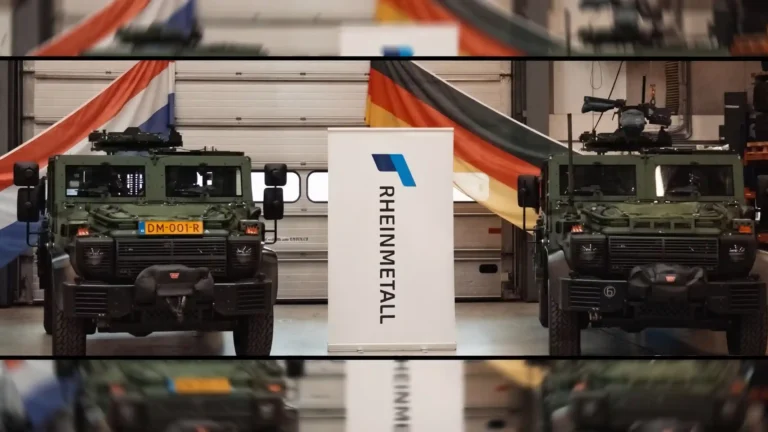
Israel Weapon Industries (IWI) and Dutch defense company Artillerie Inrichtingen Armaments (AIA) plan to manufacture and assemble IWI’s ARAD 5 rifle and NEGEV UX machine gun at a new factory in the Netherlands, the companies said in a joint statement issued from Tilburg. IWI would provide the technology and manufacturing know-how, while AIA would establish the plant and the infrastructure to deliver and support the weapons. The statement discloses no investment, production volume, site, opening date or customer.
The plan surfaces as the Netherlands prepares to replace its standard infantry weapon. An April 23, 2025, project letter to parliament said the modernized Colt Canada C7 rifle and C8 carbine reach the end of their technical life in 2030, with €250 million to €1 billion set aside for 2027 through 2041.
ARAD 5 Rifle and NEGEV UX: What the Dutch Line Would Build
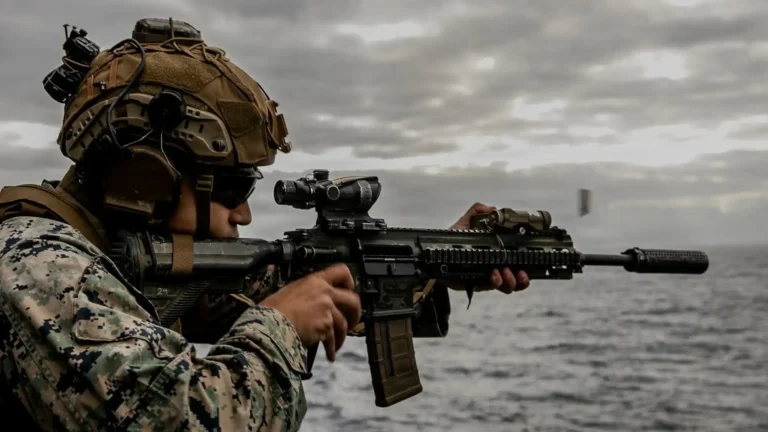
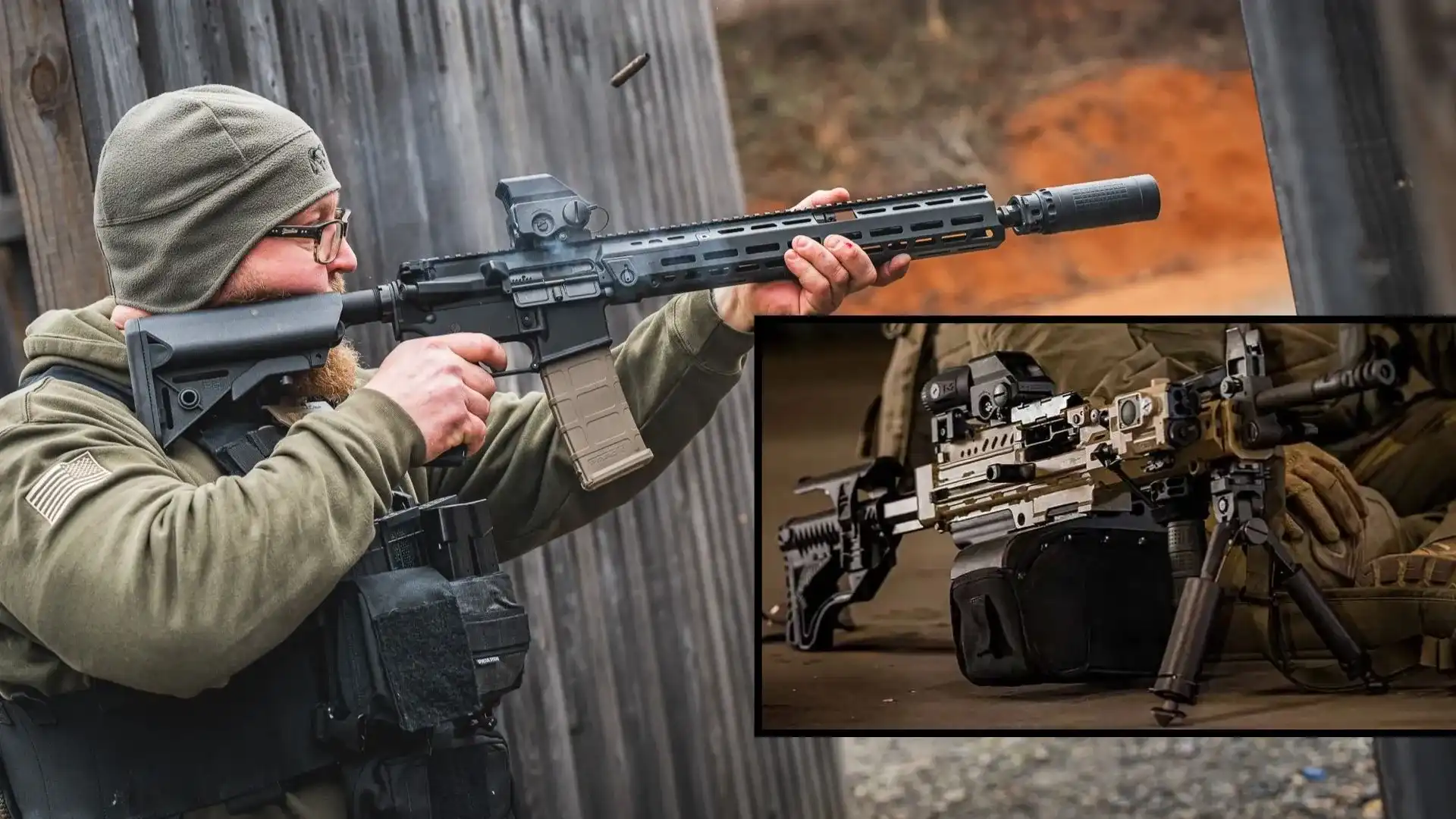
The ARAD 5 is a 5.56x45mm NATO rifle built around a short-stroke gas piston with a two-position regulator. It takes standard AR-pattern magazines and uses a quick-change barrel system that also supports .300 Blackout, and publicly available specifications indicate barrel lengths of 292 mm, 368 mm and 406 mm. Published data put the empty weight at 2.8 to 3.0 kg, while IWI’s US subsidiary lists a 406 mm semi-automatic civilian model at 3.41 kg with a magazine. M4-style controls and the magazine interface would limit retraining for troops coming from the AR-derived C7 and C8. The statement does not specify which configurations AIA would build.
Israel completed distribution of thousands of ARAD rifles to rapid response teams in January 2026, and Argentina selected the ARAD 5 and ARAD 7 this year after evaluations in 2024 and 2025.
The NEGEV UX is a 7.62x51mm NATO light machine gun that weighs about 6.8 kg. Developed with the Israel Defense Forces, it fires in semi-automatic and full-automatic modes and has a telescopic buttstock, a long Picatinny rail, M-LOK attachment points and a two-position gas regulator. IWI’s US subsidiary lists the 508 mm Negev NG7 at about 7.9 kg, an indicative 1.1 kg gap because available sources do not state the UX barrel length. For a gunner, that places 7.62 mm fire in the weight class of 5.56 mm light machine guns. Israel ordered Negev 7 and UX guns in July 2025 in a deal worth NIS 67 million, about $20 million, with deliveries in 2026 and 2027.
How AIA and IWI Would Stand Up Dutch Small Arms Production
AIA describes itself as a Dutch-owned small and medium-sized enterprise developing ammunition, weapon systems and counter-drone equipment, including remotely controlled weapon stations. It carries a name tied to Dutch arms production since 1679. AIA has its headquarters, with office and production space, in Tilburg and acquired the former Bruineveld munitions complex in January 2026. The companies did not say whether either site would host the line. Chief executive Gerard Zondervan called a strong Dutch industrial base “fundamental to national security.” IWI has localized before, setting up ARAD assembly with FAME in Peru and building the ARAD 5 in Andersonville, Tennessee, through its US subsidiary.
The Dutch demand signal and politics are mixed. The Ministry of Defense’s May 2026 project overview placed the rifle replacement in a combined study and procurement-preparation phase, and neither company linked the factory to that program. The only machine gun project in the April 2025 letter is a multi-barrel weapon, about 200 systems, for ships and helicopters, so the letter sets no requirement comparable to the NEGEV UX. On January 20, 2026, the lower house adopted a motion asking the government to phase out dependence on the Israeli arms industry, citing about €2 billion in purchases. On September 8, 2026, it rejected a further motion aimed at companies with joint ventures with that industry. The ministry aims to buy 50 percent from Dutch and European companies, a target that includes licensed production.
Analysis: The plan would place an Israeli design inside a Dutch production base as the ministry’s rifle decision approaches and its procurement policy credits local manufacture. Onshore assembly could support a sovereignty argument, but design authority would likely remain with IWI, and the adopted January motion makes any new Israeli-origin program politically exposed. Timing may be the harder constraint: the ministry has stated a preference for an off-the-shelf rifle and says the current stock must be replaced by 2030, which leaves little margin for a factory with no published schedule.
The next marker is the ministry’s combined letter to parliament on the rifle replacement, expected at the end of 2026. Still unknown are the plant’s financing and capacity, the share of locally made components, export rights, and whether Dutch authorities have been offered either weapon.