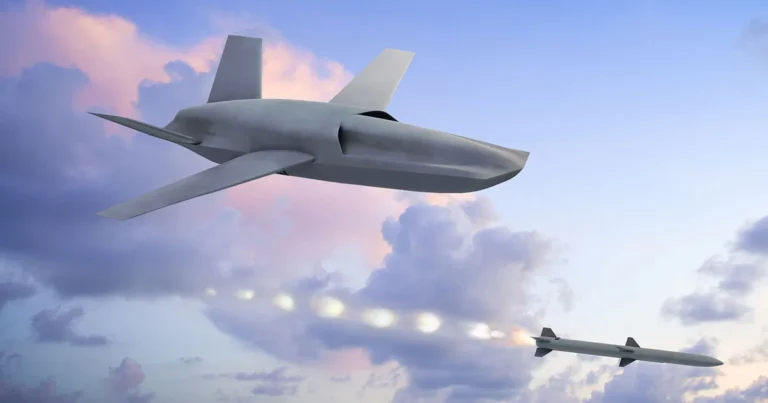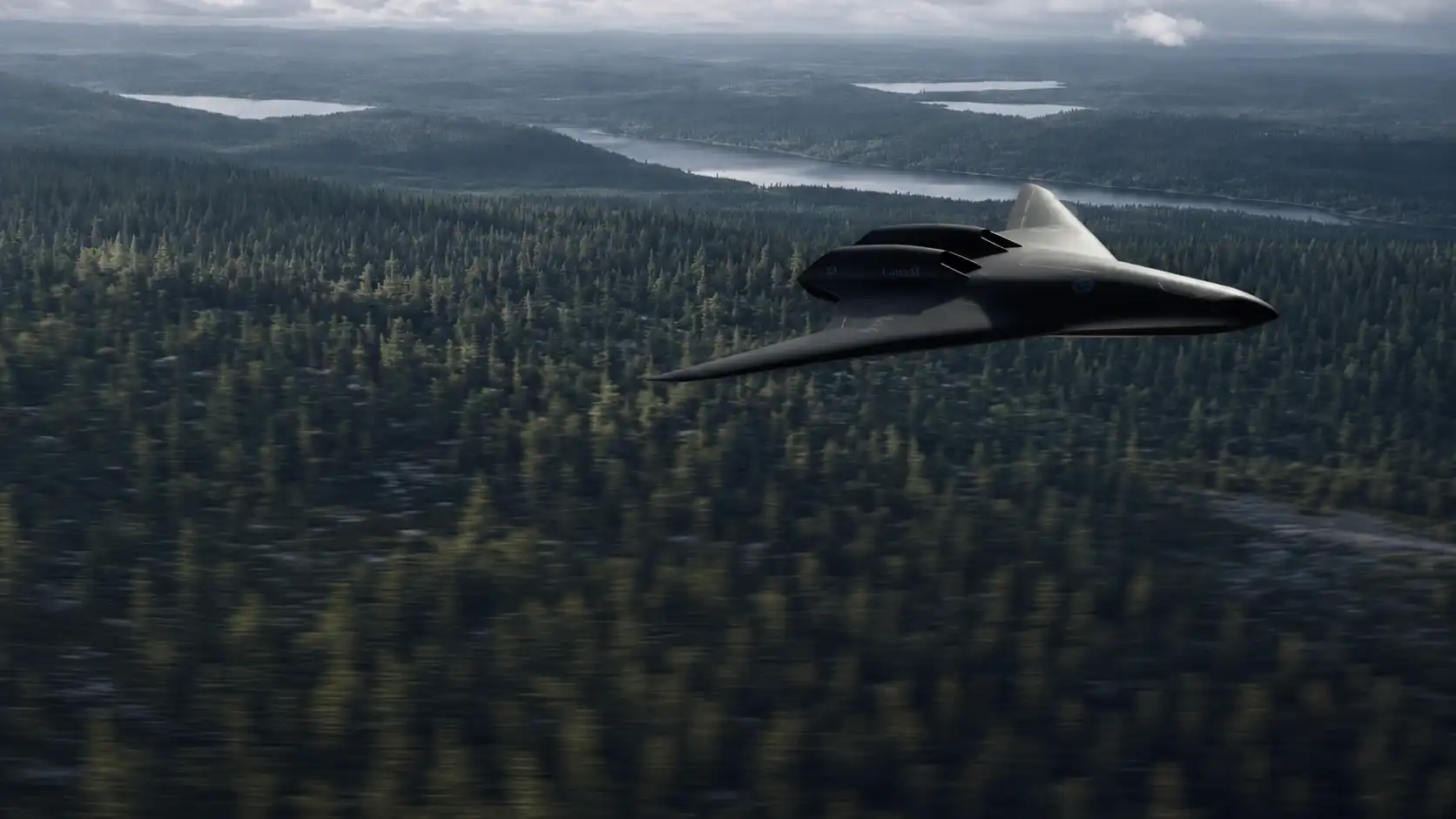
Ottawa-based Dominion Dynamics will power its Dominion Scout Autonomous Collaborative Platform (ACP) with a Canadian-built Pratt & Whitney Canada (P&WC) PW300-series turbofan, the company announced on November 17, 2026. Dominion leads development of the autonomous wingman drone and is designing the Scout airframe around the engine, with the two companies working together early in the program to integrate propulsion into the aircraft’s design.
The engine choice gives Scout a named propulsion partner eight months after Dominion committed C$50 million of its own capital on March 5, 2026, to launch the program. The startup, founded in 2025 by former Anduril Industries international business lead Eliot Pence, followed with a C$139 million (about $100 million) Series A round in mid-2026 led by Georgian, with proceeds earmarked for Scout and the AuraNet command-and-control (C2) platform. Canada has no collaborative combat aircraft in service, and the Department of National Defence has said the Royal Canadian Air Force (RCAF) is studying the concept without having made a procurement decision.
Dominion Scout Design Built Around the PW300 Turbofan
Dominion is designing Scout around the three defining constraints of the Arctic theater: long transit distances, extreme cold, and sparse infrastructure. The aircraft is intended to fly alongside crewed fighters and accept tasking from either airborne or ground-based command systems, a dual path suited to a region where ground networks are thin and geostationary satellite links degrade at high latitudes.
Neither company has disclosed which PW300 variant Scout will use, whether the design is single- or twin-engine, or any figures for range, endurance, speed, or payload. Because the airframe is being shaped around the engine, the thrust class selected will drive the aircraft’s size, fuel fraction, and internal volume.
Publicly available specifications indicate the PW300 family is a high-bypass turbofan line with certified variants spanning roughly 4,700 lbf of thrust for the original PW305 to about 7,000 lbf for the PW308 series, all managed by dual-channel Full Authority Digital Engine Control (FADEC). The family powers business jets including the Dassault Falcon 2000 and Falcon 7X, the Cessna Citation Latitude and Sovereign, and the Gulfstream G200. P&WC states it has produced more than 6,000 PW300 engines, which have logged over 33 million flight hours.
That thrust band sits above the Williams International FJ44 reportedly fitted to Anduril’s YFQ-44A Fury and above the PW500 family Pratt & Whitney supplied for Northrop Grumman’s YFQ-48A Talon Blue. If Scout uses a single PW300, it would likely be a heavier aircraft than U.S. Air Force CCA Increment 1 designs, with more margin for fuel over Arctic distances; Dominion has not confirmed any of this. Scott McElvaine, P&WC vice president of business development and marketing, said the company has proven engines for all ACP thrust classes.
Domestic Supply Chain and the Allied Autonomous Aircraft Market
The collaboration links Dominion’s engineering teams in Ontario, Quebec, and Nova Scotia with P&WC’s manufacturing base. P&WC is headquartered in Longueuil, Quebec, and also operates in Ontario, Nova Scotia, and Alberta. Dominion argues that building around an established Canadian engine keeps engineering, manufacturing, and through-life support work in the country, and that allied orders could widen the customer base for domestic suppliers as Scout moves toward production.
McElvaine said early involvement lets P&WC shape the aircraft’s design, and that a commercial off-the-shelf engine offers a more efficient development path. Industry Minister Mélanie Joly tied the collaboration to economic sovereignty, domestic supply chains, and skilled jobs. Pence said Scout is designed for “the unique demands of the Canadian Arctic,” with aspirations to serve allies facing similar conditions.
Dominion cites a global autonomous aircraft market valued at $16.4 billion in 2026 and projected to reach $61 billion by 2034, and notes that the United States, Australia, the United Kingdom, Germany, and Japan each fund their own autonomous combat aircraft programs. In August 2026, Dominion said Scout was on track for a first flight within 24 to 30 months, and that it would soon begin virtual prototyping by flying competing Scout designs against each other. AuraNet, already deployed with Canadian Rangers in the High Arctic during Operation Nanook-Nunalivut, is the logical source of Scout’s ground-based tasking, though no integration plan has been described.
Analysis: The PW300 selection addresses one of the hardest early risks in any uncrewed combat aircraft program. A certified engine with a large production base and an established support network shortens qualification and reduces cold-weather reliability risk, a central concern at austere northern airfields, while giving Ottawa a domestic content argument. The open question is fit: a PW300-class engine points toward a larger and costlier airframe than the attritable designs some allies favor, and Dominion has yet to show how Scout’s mission systems, weapons integration, and unit cost compare with U.S. Increment 1 aircraft already in flight test.
Key unknowns remain the engine variant, the airframe configuration, and a firm first-flight date within the 24-to-30-month window. The milestones to watch are a formal RCAF requirement or funding line for an ACP capability and whether an allied customer commits before Ottawa does. Until then, Scout remains a privately funded effort with no publicly announced government contract.