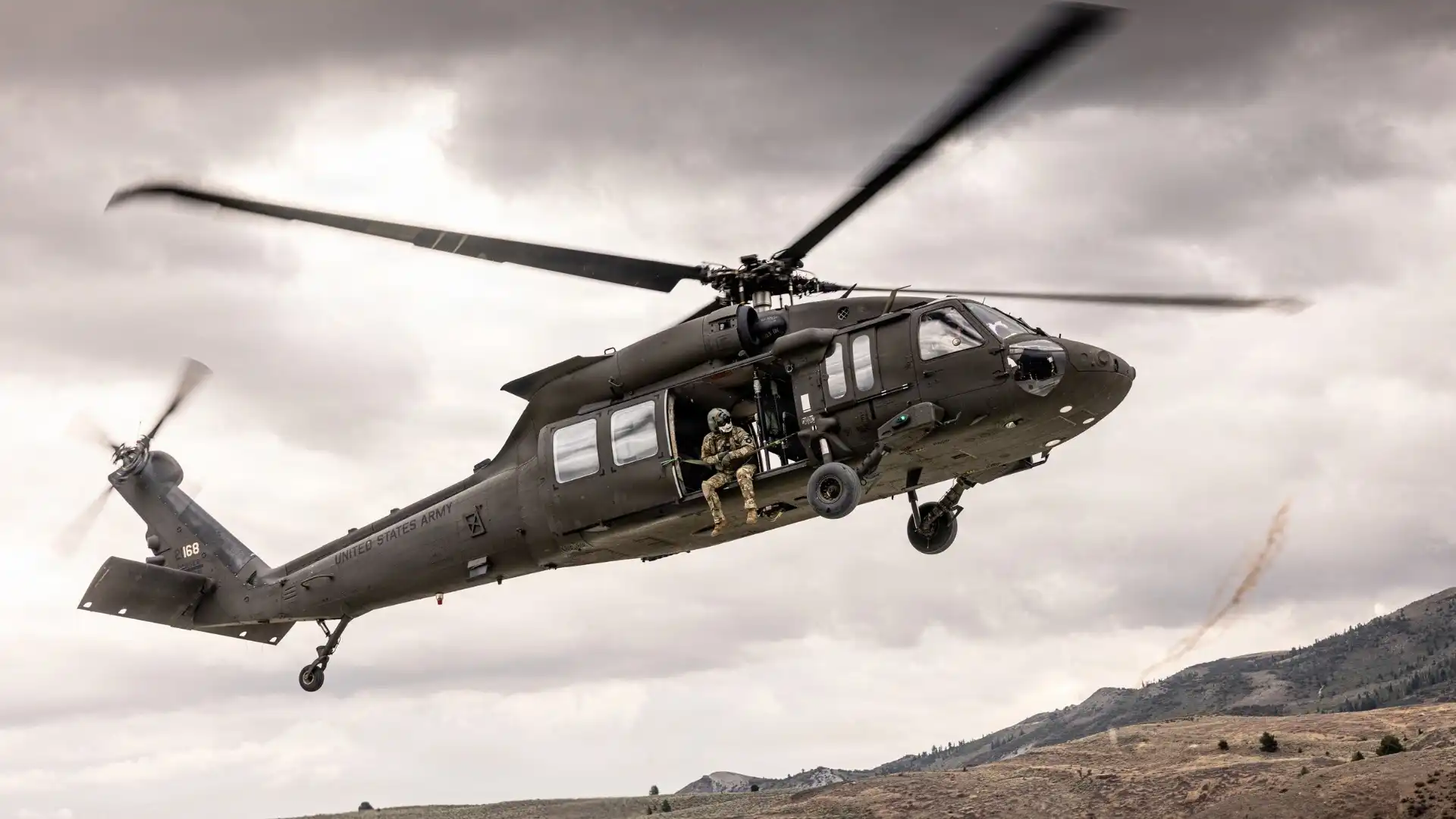
Argentina’s Ministry of Defense signed a Letter of Offer and Acceptance (LOA) with the United States on November 6, 2026, for four Sikorsky UH-60L Black Hawk medium utility helicopters assigned to the Argentine Army. The case runs through the Foreign Military Sales (FMS) system under the U.S. Army’s Black Hawk Exchange and Sales Transaction (BEST) program, and the ministry puts the cost of the first four aircraft at about $28 million, including spare parts and consumables. The first helicopter is due before the end of 2026.
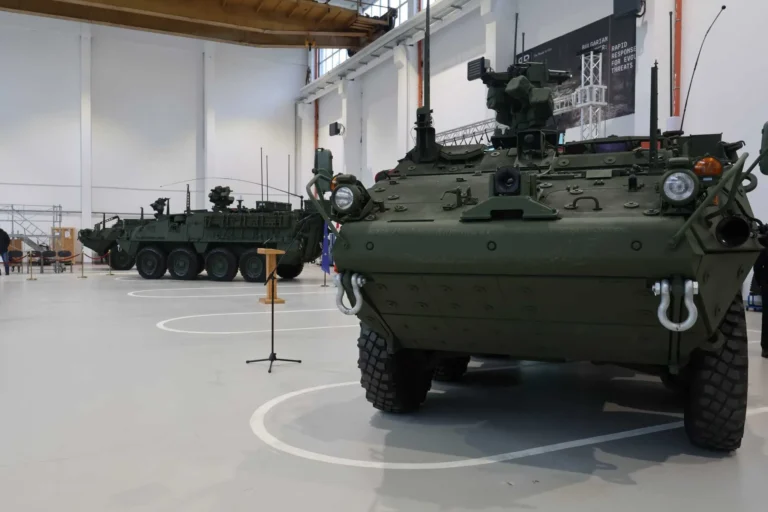
The LOA was signed at the Edificio Libertador in Buenos Aires by Defense Minister Lieutenant General Carlos Alberto Presti, U.S. Ambassador Peter Lamelas, Army Chief of Staff Oscar Santiago Zarich, and Army Aviation Director Coronel Mayor Sergio Esteban Di Clemente. It follows the U.S. State Department’s September 10, 2026, approval of a possible FMS case covering four UH-60L airframes and two spare T700-GE-701D engines, notified at an estimated ceiling of $140 million. The helicopters join a U.S.-aligned recapitalization that includes 24 ex-Danish F-16AM/BM fighters and M1126 Stryker 8×8 vehicles, with an LOA for up to 235 more Strykers signed on August 21, 2026.
Argentina Black Hawk Configuration: Engines, Avionics, and Mission Kit
The ministry describes the four aircraft as configured specifically for Argentina. Each is powered by two General Electric T700-GE-701D turboshafts, the engine standard of the newer UH-60M, paired with a digital avionics fit. GE rates the -701D at 2,000 shp, about 5 percent more than the -701C that originally equipped the L-model, a margin that matters in hot-and-high conditions.
Navigation and communications include a Garmin GTN 750 GPS navigator, attitude and heading reference systems (AHRS), and multiband HF, VHF, and UHF radios. According to the ministry, the aircraft cruises at about 280 km/h, depending on load and flight conditions, and carries around 11 fully equipped troops. Mission equipment comprises a Fast Rope Insertion/Extraction System (FRIES), an external cargo hook, and compatibility with the Bambi Bucket for wildfire suppression.
Publicly available specifications give the UH-60L a maximum gross weight of 22,000 lb (9,979 kg) and an external hook capacity of 9,000 lb (4,082 kg). Against the single-engine Bell UH-1H and Huey II now flown by Argentine Army Aviation, the Black Hawk offers twin-engine redundancy, a crashworthy airframe, higher cruise speed, and a 9,000 lb hook against 4,000 lb for the UH-1H and 5,000 lb for the Huey II. Troop capacity is broadly comparable, so the gain lies in reach, survivability, and heavy sling-load work rather than seats per sortie.
BEST Pricing, Colombian Training, and the UH-1H Replacement Path
BEST allows the U.S. Army to divest older H-60 airframes and reinvest the proceeds in new production, with eligible aircraft offered to federal agencies first and then to other buyers, including foreign governments. That mechanism explains the gap between the $140 million notification and the roughly $28 million figure cited by Buenos Aires: State Department notifications set maximum case values for a full support package, not contract prices. The ministry credits Argentine technical commissions for the lower cost.
Crew and maintainer training began before signature. Army delegations traveled to Colombia, one of the most experienced Black Hawk operators in the region, to exchange operating and maintenance experience. Local reporting indicates U.S.-based courses are also planned.
The purchase revives an effort that stalled once before. A public tender for three used UH-60s, launched in 2024, was canceled in early January 2025 under a resolution signed by Presti, then Army chief. The ministry traces the requirement to his command of the 4th Airborne Brigade in Córdoba in 2023 and of the Army General Staff in 2024.
Analysis: Four airframes form a training and doctrinal nucleus, not an operational fleet. Even with all four airframes available, the fleet lifts about 44 equipped troops per wave, enough to qualify crews and write procedures, but not to move a company-sized air assault element at once. The strategic weight of the deal lies elsewhere: by moving its F-16s, Strykers, and now Black Hawks through FMS, Argentina is standardizing on U.S. logistics chains and aligning with regional H-60 operators such as Colombia, Brazil, and Mexico. Sourcing used L-models through BEST keeps acquisition costs low, but it also ties future fleet growth to the pace of U.S. Army divestment and to the cost of sustaining airframes that left U.S. service after long careers.
The next milestone is delivery of the first UH-60L before year-end. The ministry describes the four helicopters as the initial core of a capability meant to grow, but has disclosed no follow-on quantity, schedule, or basing plan. Local reports point to a first-phase fleet of 20 aircraft and to the 601st Assault Helicopter Battalion as the receiving unit; neither figures in the ministry’s announcement. Door-gun armament, follow-on LOAs, and 2027 budget allocations remain open questions.